
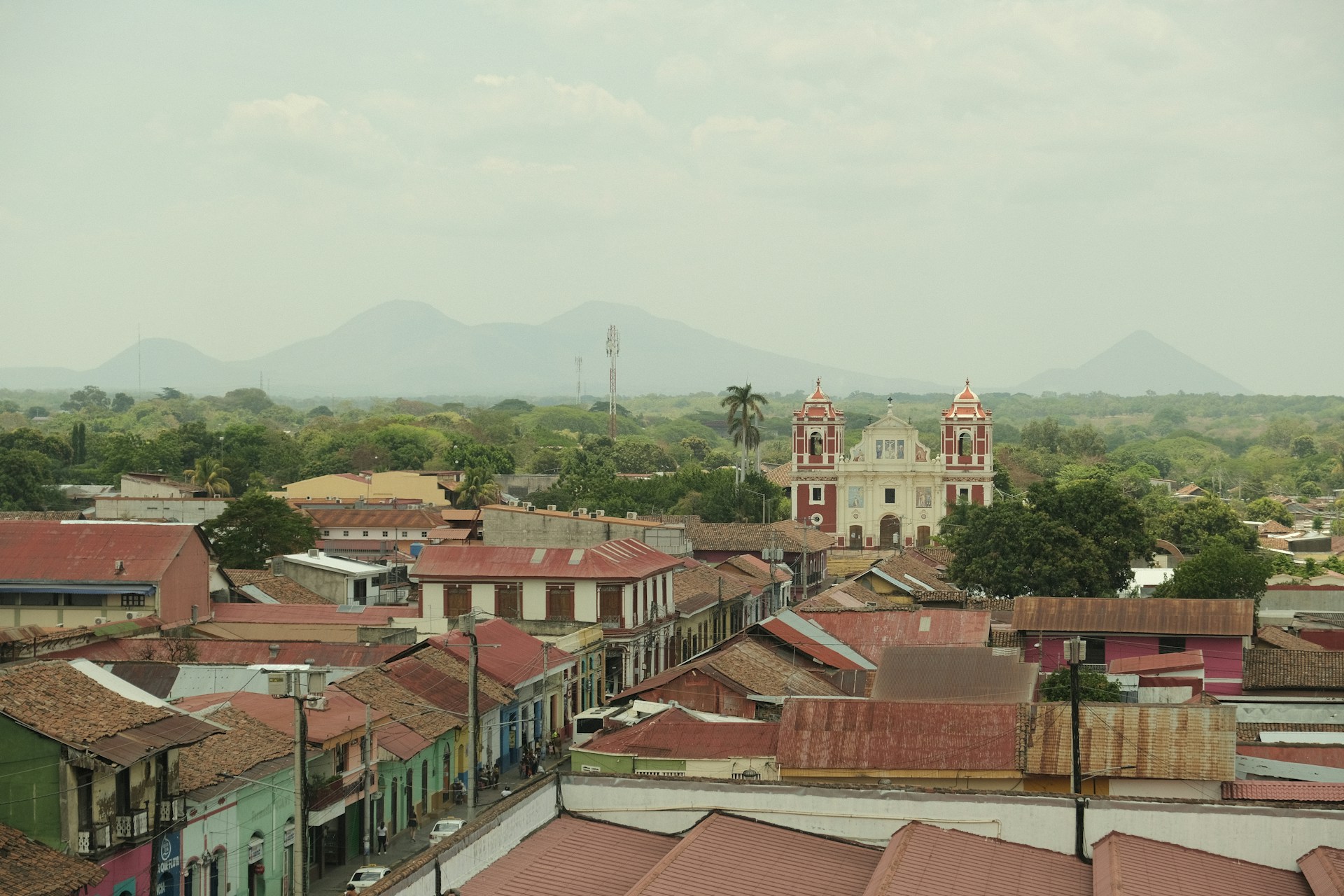

Nicaragua today represents one of the most consolidated authoritarian regimes in the Western Hemisphere, yet paradoxically, one of the least discussed. Despite extensive documentation by the UN Human Rights Council (HRC), the Group of Human Rights Experts on Nicaragua (GHREN), the Inter-American Commission on Human Rights (IACHR), and organizations such as Human Rights Watch and Amnesty International, the country’s profound democratic collapse has been met with a striking level of international indifference. Unlike other crises in the region, Nicaragua does not possess significant natural resources, military relevance, or geopolitical weight. It is not perceived as a threat to regional stability, nor does it generate the type of mass migration that has forced international attention in cases such as Venezuela or the Northern Triangle (El Salvador, Guatemala, and Honduras). As a result, the country remains outside the diplomatic spotlight, even as GHREN reports suggest the possible commission of crimes against humanity. Recent developments in Ecuador, marked by an acute surge in criminal violence, as well as the longstanding diplomatic pressure historically directed at Cuba, further illustrate how other regional crises have prompted far more visible international engagement than Nicaragua’s situation.
This invisibility is compounded by the saturation of crises in Latin America, such as the humanitarian collapse in Haiti, the erosion of judicial independence in Guatemala, and the prolonged state of emergency in El Salvador. In this crowded landscape, Nicaragua has become the “forgotten dictatorship,” a regime that advances with minimal scrutiny and almost no external pressure. The Ortega-Murillo government has taken advantage of this vacuum. By closing civic space, eliminating independent media, expelling international organizations such as the Organization of American States (OAS), and forcing thousands into exile, the regime has effectively dismantled the internal mechanisms that typically generate international visibility.
1. Human Consequences: Exile, Fear, and the Normalization of Repression
Behind the geopolitical silence lies a profound human tragedy. Since 2018, Nicaragua has experienced a sharp increase in emigration, with over 300,000 nationals seeking protection in Costa Rica alone, according to reports by the International Organization for Migration (IOM) and partner agencies. The repression that triggered this displacement has been systematic and brutal. Arbitrary detentions, torture, incommunicado detention, and enforced disappearances have been documented by the OHCHR and GHREN. According to Amnesty International and Human Rights Watch, facilities such as El Chipote have become symbols of state terror, where political prisoners endure prolonged isolation, denial of medical care, and coercive interrogations. Repression is not limited to political leaders or activists. Students, journalists, farmers, human rights defenders, and ordinary citizens have been targeted for expressing dissent. Independent universities have been shut down, their legal status revoked, and their assets seized; NGOs dissolved, and media outlets such as La Prensa forced into exile. The human cost of Nicaragua’s authoritarianism is measured not only in violations but in the erosion of hope, dignity, and the possibility of civic participation. These experiences are echoed in testimonies from exiled Nicaraguans, such as those interviewed by DW Akademie, who describe the emotional weight of displacement and the loss of home and identity.
2. When the Law Becomes a Weapon: The Architecture of Legalized Repression
One of the most striking features of Nicaragua’s authoritarian turn is the deliberate use of law to dismantle democracy. Since 2018, the regime has constructed a sophisticated legal framework designed to criminalize dissent, eliminate political competition, and institutionalize impunity. Furthermore, the 2019 Amnesty Law granted impunity to state and paramilitary agents responsible for killings, torture, and arbitrary detentions. This contradicts the Inter-American Court’s prohibition of amnesties for serious human rights violations in cases such as Barrios Altos v. Peru, La Cantuta v. Peru, and Gelman v. Uruguay. The 2020 Cybercrimes Law criminalizes “false” or “distorted” information—vague categories that enable the prosecution of journalists and critics. This contradicts the Court’s jurisprudence in Kimel v. Argentina and Herrera Ulloa v. Costa Rica.
Moreover, the Foreign Agents Law forces organizations receiving foreign funds to register as “foreign agents,” prohibiting them from participating in political activities and facilitating the cancellation of NGOs, universities, and media outlets. In addition, Law 1055 allows the government to label opponents as “traitors to the homeland,” barring them from elections, reproducing the pattern condemned in Yatama v. Nicaragua. Furthermore, Law No. 1190, adopted as an emergency constitutional reform in 2023, further entrenched executive control by enabling the government to restructure institutional checks and expand discretionary powers over political rights. Finally, The 2021 reform to the Code of Criminal Procedure extended pretrial detention to 90 days, violating the right to immediate judicial control recognized in Tibi v. Ecuador and Bayarri v. Argentina. Law No. 1115 enabled the banning of more than 5,000 organizations, effectively eliminating civil society. Between 2021 and 2025 alone, more than 450 people were stripped of their nationality many rendered statelessdespite the Court’s finding that such practices are arbitrary in Expelled Dominicans and Haitians v. Dominican Republic .
3. Persecution of the Church, Electoral Authoritarianism, and Institutional Reconfiguration
The regime has also targeted religious institutions, particularly the Catholic Church. The IACHR and GHREN report that priests and bishops have been detained, expelled, or subjected to surveillance. Catholic media outlets have been closed, religious processions banned, and social works confiscated. This persecution is part of a broader strategy to eliminate any institution capable of influencing public opinion or providing support to victims of repression.
Nicaragua’s electoral system has been systematically redesigned to guarantee the regime’s permanence in power. The 2021 Reform and Addition to the Electoral Law restricted independent observation, allowed the cancellation of parties based on vague criteria, and granted the Supreme Electoral Council broad discretion to register or reject candidacies. These measures violate the standards of free and authentic elections established in Castañeda Gutman v. Mexico. The regime has also eliminated political pluralism by cancelling opposition parties and arresting or disqualifying potential presidential candidates. Indefinite presidential reelection, enabled by previous constitutional reforms, further consolidates authoritarianism. This erosion of constitutional guarantees is not merely a domestic concern but directly engages the State’s international obligations. In this regard, the Inter-American Court’s Advisory Opinion OC‑28/21 reinforces this argument by establishing that indefinite reelection is not a human right and, moreover, undermines democratic alternation precisely the type of institutional degradation observed in Nicaragua.
Between 2021, 2024 and 2025, constitutional reforms reshaped the structure of the Judiciary, the Public Prosecutor’s Office, and other state bodies. These reforms eliminated checks and balances, facilitated politically aligned appointments, and consolidated a judicial system subordinated to the Executive. This contradicts the Inter-American Court’s jurisprudence on judicial independence, including López Lone v. Honduras and Apitz Barbera v. Venezuela. Judges and prosecutors have become instruments of political persecution, issuing decisions that criminalize dissent and legitimize repression.
Nicaragua has developed a model of digital authoritarianism that complements its legal and police repression. The Cybercrimes Law allows the criminalization of social media posts, while the state has expanded its capacity for digital surveillance, communication monitoring, and platform control. According to Access Now and Freedom House, independent digital media have been censored or blocked; administrators of critical pages have been persecuted; and mobile devices are subject to monitoring.
This digital control is reinforced by a foreign policy designed to shield the regime from accountability. Nicaragua has expelled international organizations, withdrawn from the OAS, and cultivated alliances with Russia, China, and Iran. These partnerships provide political support, technical cooperation, and diplomatic backing against international condemnation, while facilitating agreements on security, technology, and surveillance.
The National Police has become the primary instrument of repression, acting as a political force rather than a body dedicated to citizen security. Its militarization, direct subordination to the Executive, and involvement in arbitrary detentions and torture have been widely documented by GHREN, OHCHR, and the IACHR. Paramilitary groups operate with state tolerance and coordination, creating a hybrid system of repression that blurs the line between state and non-state violence. The Army, meanwhile, maintains a posture of functional neutrality that benefits the regime.
The legal, institutional, and political transformations described above constitute a pattern of serious and systematic violations that activate the State’s international responsibility, as established by the Inter-American Court in its landmark decision in Velásquez Rodríguez v. Honduras, which held that widespread and systematic violations aggravate State responsibility.
Nicaragua’s democratic reconstruction is not merely an institutional challenge. It is an urgent historical necessity. Exiting authoritarianism requires a comprehensive process grounded in international standards. Essential measures include the release of political prisoners, the safe return of exiled persons, the repeal of repressive laws, the restoration of legal status to organizations, the reconstruction of judicial independence, the vetting and reform of police forces, independent electoral observation, and transitional justice mechanisms ensuring truth, justice, reparation, and guarantees of non-repetition. The international community must play an active role through technical assistance, permanent monitoring, and support for civil society. Democratic reconstruction will not be automatic or quick, but it is the only path to restoring dignity, freedom, and the rule of law in Nicaragua.
Conclusions
Nicaragua’s authoritarian consolidation is neither accidental nor improvised. It is the result of a deliberate strategy that combines legal engineering, institutional capture, digital surveillance, and geopolitical realignment to neutralize dissent and ensure the indefinite permanence of those in power. The regime has succeeded not only because of its internal mechanisms of control, but also because of an international environment marked by geopolitical disinterest, regional fragmentation, and crisis fatigue. This combination has allowed one of the most severe human rights crises in the hemisphere to unfold with limited scrutiny and insufficient diplomatic pressure.
Yet, the Nicaraguan case also illustrates a broader regional trend: the rise of legalistic authoritarianism, where democratic institutions are hollowed out from within while maintaining a façade of constitutional normality. Understanding this model is essential for preventing its replication elsewhere. Nicaragua shows that authoritarianism in the twenty-first century does not always emerge through abrupt ruptures, but through gradual legal reforms, administrative decisions, and the systematic erosion of checks and balances.
Despite the current stagnation, history demonstrates that no authoritarian regime is impermeable to social demands for justice, dignity, and freedom. The resilience of Nicaraguan civil society—inside and outside the country—remains a crucial foundation for any future democratic transition. International actors must recognize that silence and inaction only strengthen authoritarian consolidation. Sustained monitoring, diplomatic engagement, and support for victims and exiled communities are indispensable. In this context, various sources including GHREN, the IACHR, OHCHR, Freedom House, Access Now, Human Rights Watch, and independent media such as Confidencial and Divergentes show that Nicaraguans continue to mobilize despite repression, through community networks, digital resistance, and organization in exile.
Ultimately, Nicaragua’s crisis is not only a national tragedy but also a test for the international human rights system. Whether the country remains a “forgotten dictatorship” or becomes a priority for democratic reconstruction will depend on the willingness of states, institutions, and civil society to confront a regime that has mastered the art of repression under the cover of global indifference.
Photo by Austin Curtis on Unsplash
