

I don’t think it’s controversial to say that there’s a nerd in every (most?) scholar of public international law. In fact, reading the first paragraph of Gail Lythgoe’s article on Eradicating the exceptional: The role of territory in structuring international legal thought, I expect some of the readers to feel seen, but also perhaps targeted when reading the first paragraph:
International lawyers are a little in love with the sui generis. With the extraordinary. With the unique and wonderful. With the somewhat geeky anomalies associated with remnants of historical actors and structures. But also, of the new and strange. The novel or special cases. The sui generis is at once exciting, sexy, and nerdy for international lawyers. Displaying good knowledge of exceptions is often how one identifies as being internal to the discipline of international law. Exceptional cases unceasingly provide teaching materials and are fruitful areas of research and writing. (footnote omitted)
The reality of most of international law is usually less interesting, fortunately or unfortunately. Diplomats and legal officers are often not in a position to offer the kind of detailed, tedious scrutiny that is sometimes implied by the subsequent extrapolations based on specific cases or examples. For instance, the case has been made, rather convincingly, that silence in the creation of customary international law is not always a sign of acquiescence but rather is often reflective of a lack of resources by the majority of states to fully and comprehensively engage with all ongoing developments.
However, there are also sources of hope in what is generally a grim time to study public international law. Namely, I write this blog to mark my appreciation for the work of the International Law Commission (ILC; the Commission). I imagine most readers of this blog will have at least heard about it or have familiarised themselves with its output at some point of their education. Indeed, the ILC’s work is eminently suited for teaching due to its usually straightforward formulation and unequalled ability to distill complex topics into polished draft articles, conclusions, etc. paired with thorough commentaries. Until recently though, I only had a basic grasp of the “how”; i.e., the process through which the ILC fulfills its mandate to contribute to the “progressive development of international law and its codification” under Article 13.1 of the UN Charter (via the UN General Assembly).
What is the ILC, and how does it function?
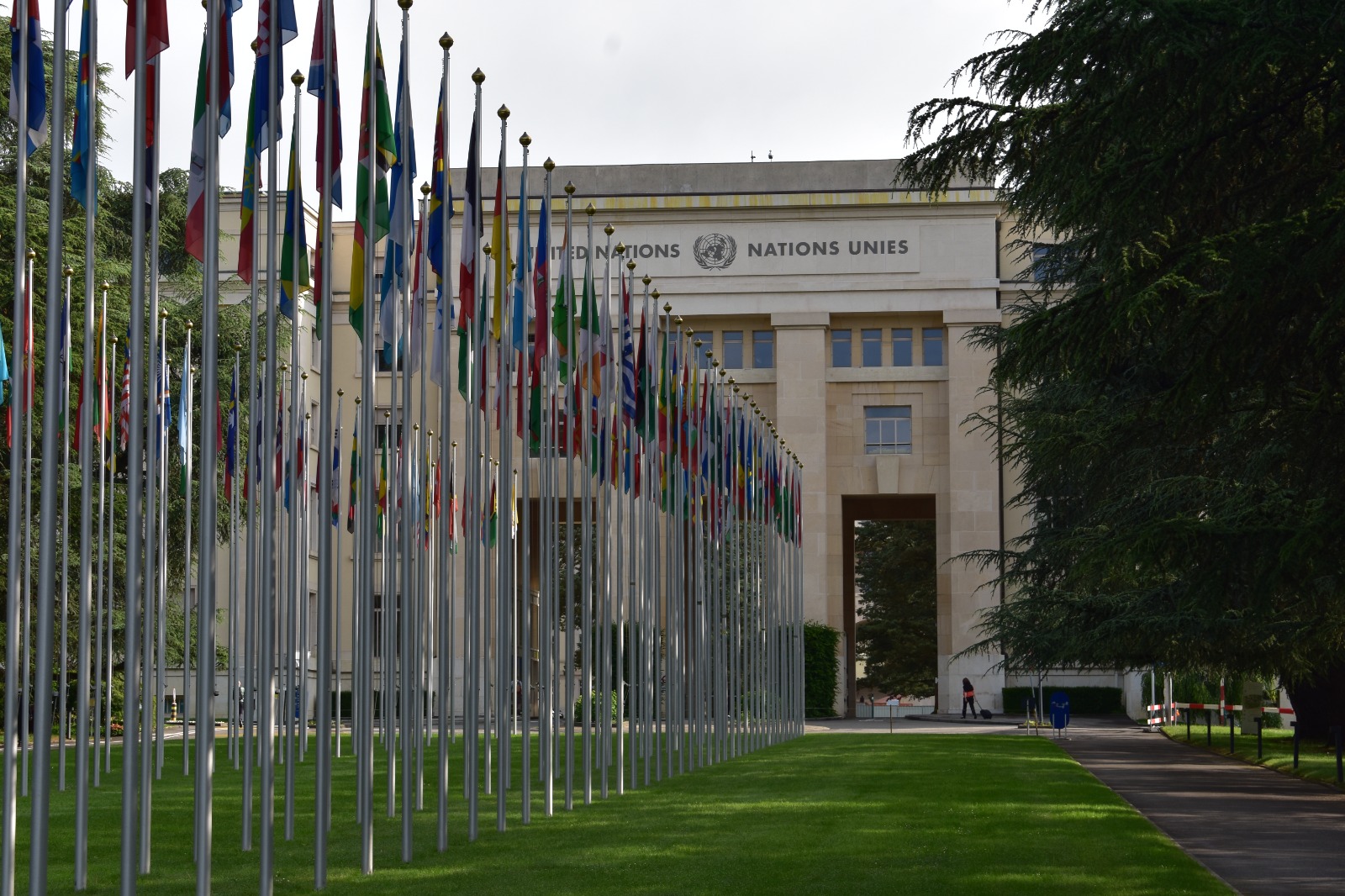
As a recent participant to the 59th edition of the International Law Seminar (ILS) organised by the UN Office in Geneva, I was lucky enough to observe first-hand the work of the ILC as part of its 76th session (unfortunately shortened to five weeks instead of the planned twelve, due to the UN’s liquidity crisis).
Constituted of 34 experts on international law elected in personal capacity by the UN General Assembly (UNGA) and representative of different regions, legal systems and professional backgrounds (legal advisors, academics, practitioners), the Commission is a subsidiary organ of the UNGA. This institutional tie is a key part of the ILC’s work as its output is discussed and commented on by States in the UNGA’s Sixth Committee.
As part of its mandate, the Commission has worked (and works) on a wide range of topics and acts as the only international legal organ with a fully generalist task in relation to its mandate. This has enabled the commission to address key structural themes of international law such as the law of treaties (famously resulting in the drafting and eventual entry into force of the 1969 Vienna Convention on the Law of Treaties), but also to thoroughly investigate substantive issues such as its recent work on Sea-level rise in relation to international law.
While I will not describe at length the internal process of the Commission (for those who are interested, more is available here in the ILC’s guide or for a shorter text, here), it is noteworthy that the Commission generally works on a consensus basis. In practice, this requires a refreshing and remarkable degree of collegiality and mutual respect between experts from different backgrounds, legal traditions and perspectives. This is in sharp contrast with what tends to trend in global news, whether it is half-baked tariff policies or blatantly illegal behaviour by states, whether it is Israel or Russia (to single out these particularly egregious examples).
A ray of light in darkening times?
There are many reasons to criticize the Commission. To pick only one, gender balance is lacking; without the welcome nomination of Madam Penelope Ridings [1] as a special rapporteur on due diligence in international law there would not have been any active female special rapporteur at the time of writing. Another one worth mentioning is the prima facie lack of representation of indigenous legal systems, despite the commission’s claim to representation and universality.
However, despite its flaws and the growing pressure on multilateralism, the ILC is a rare source of optimism in what is otherwise a dark time for international law. For one thing, it is incredibly refreshing to witness the meticulous process of multilingual drafting, taking into account nuances of meaning but also the discrepancies between concepts in different legal cultures. This is reflected in the work of the Commission which is in constant oscillation between genuinely interesting dialogue on the translation of legal concepts (see here at 25:11, for example), and thorny questions of punctuation (see here at 01:07:50, for a thorough discussion on dashes and commas). After grading countless papers written by Chat GPT, many of which may not even have gotten a second look before submitting, it is reinvigorating to observe the exact opposite of generic AI writing in the form of the slow and thorough process of the Commission.
A positive note
Having the chance to observe first-hand the work of the ILC brought me back to the shock that followed Donald Trump’s first election as president of the United States in 2016. Much has been written on the causes and the process that had led to this outcome but one that was raised echoed more than the others, in relation to science and the scientific method: most of us are familiar with the results but not the process of how new insights are gathered.
This is particularly true when reading and assessing the work of the ILC; it is hard not to take seriously the Commission’s output and commentaries once one understands the process that leads to it and the extent to which every word is scrutinised. Regardless of whether one agrees or disagrees with the Commission’s output, its process and structure means that any engagement with it must include the substance of its work.
Moreover, the Commission’s close work with the General Assembly gives it a special “super-power” in the world of expert bodies which is the ability to directly consult and elicit the reaction of States. The recently concluded work of the Commission’s Study Group on Sea-level rise in relation to international law is perhaps the most compelling demonstration of the Commission’s potency in stimulating the development of international law. Namely, by pre-emptively raising important issues such as the nature of baselines and the continuity of States, the Study Group’s reporting on the issue not only allowed States to give their views but also created a space of conceptual clarity that allowed for these views to coalesce into possible norm-making.
In the end, much can be said about the need to reform international law and it is hard to disagree. But if an opportunity to rebuild international law were to arise, I would suggest retaining the ILC and taking inspiration from its commitment to the codification and progressive development of international law as one of the foundation upon which a new system can be built.
[1] Madam or Mister are the curtesy titles used at the Commission to ensure formal equality among the members, instead of academic or honorary titles such as professor of ambassador.
I would like to warmly thank the UNOG Legal Office for organizing the ILS, to all who have generously given their time during those two weeks, and to the other participants to the seminar who made this experience fun and enriching both intellectually and personally. I would also like to express my gratitude to the Department of Law and the Centre for Transdisciplinary AI at the Umeå University for making this experience possible.
