
By Camille Marquis Bissonnette
A previous version of this blog post was published on the International Law Blog on July 8, 2025, here.
—
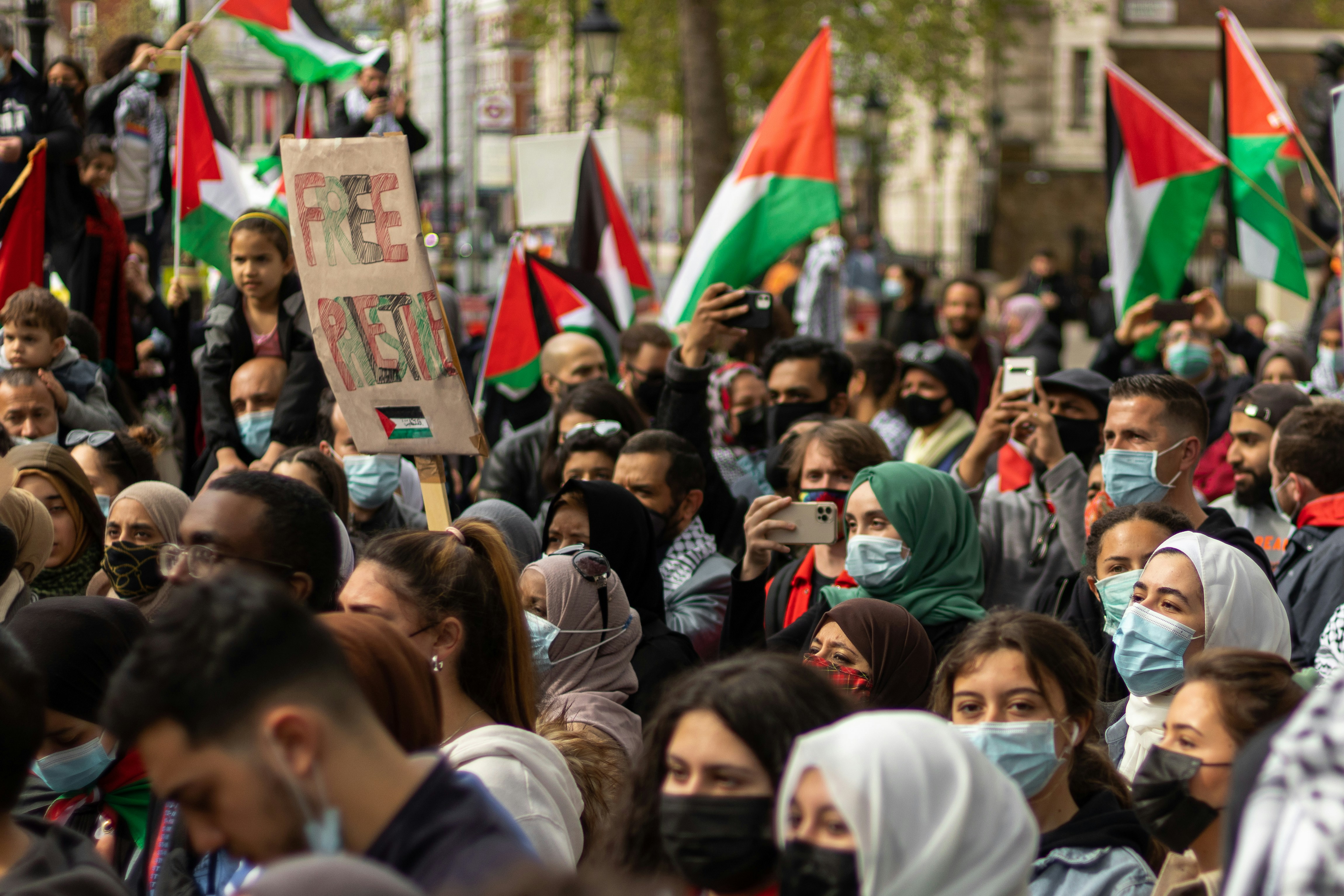
On July 2, 2025, an activist movement, Palestine Action, has been labelled as a terrorist group by the UK Parliament (by 385 votes to 26). On Saturday, July 5th, its ban has come into force, thus criminalizing virtually any action in relation to the group or its previous actions. In the first month after the ban, 204 people have been accused of terrorism infractions, notably for participating in protests denouncing the designation or for expressing support to the Palestinian cause more broadly. Most accusations are ones of support and of uniform and publication of images (s.12 and s.13 of Terrorism Act 2000).
The present blog post aims to analyse this proscription in light of international human rights law. We will first examine the legal framework on terrorism in the UK, particularly what such a ban entails and precedents for banning activist groups in recent UK history. We will then turn to its impact on human rights protection in the UK.
What happened?
Let’s begin with a short overview of the events leading to the ban of Palestine Action in the UK. Palestine Action is a UK-based movement engaged in direct action that has been active in the UK for 5 years. Direct action “is a category of activism in which participants act directly, ignoring established (or institutionalized) political and social procedures […] [such as] strikes, boycotts, sabotage, blockades, tree-sits, Black Bloc, obtaining secret footage, lock-on’s.” This strategy includes civil disobedience and may therefore violate existing laws. It may involve violence against property.
Palestine Action, according to the website of the organization, is “committed to ending global participation in Israel’s genocidal and apartheid regime” and its actions regularly involve degrading buildings, weapons, structures and vehicles in the UK that are associated or designed to be used by Israel in or against Palestine, including, for example, Israeli arms companies and foreign arms companies supplying the Israeli military. Palestine Action’s most recent direct action occurred at the Royal Air Force (RAF) base in the city of Brize Norton, the most important RAF base, on June 20. In line with Palestine Action’s strategy, militants sprayed red paint into the turbine engines of two Voyager aircraft that serve to refuel Israeli military jets.
A few days after that action, on June 23, Yvette Cooper, the UK Home Secretary, declared to the Parliament her intent to designate Palestine Action as a terrorist organization. However, it appears that this decision was anterior to that specific action (Ammori case, para. 77). On June 30, Cooper laid a proscription order before Parliament listing Palestine Action, together with two white supremacist organizations, Maniacs Murder Cult and Russian Imperial Movement, under section 3 of the Terrorism Act 2000. As the order was adopted by the Parliament on July 2 and the High Court refused to deliver an interim order to suspend the ban until a full judicial review – since the judge considered “that the harm which would ensue if interim relief is refused but the claim later succeeds is insufficient to outweigh the strong public interest in maintaining the order in force” – it entered into force on the 5th of July, 2025.
What Does this Labelling Involve?
The Terrorism Act 2000, in its Article 1, defines terrorism as the “use or threat of action” which:
a) involves serious violence against a person, b) involves serious damage to property, (c) endangers a person’s life, other than that of the person committing the action, (d) creates a serious risk to the health or safety of the public or a section of the public, or (e) is designed seriously to interfere with or seriously to disrupt an electronic system, when it is
“designed to influence the government or an international governmental organization or to intimidate the public or a section of the public” and when it is made “for the purpose of advancing a political, religious, racial or ideological cause.”
The first element – the list of acts – is notably broad since it is open-ended. It is also not limited to conduct that endangers human life and includes “serious damage to property.” In light of Palestine Action’s strategy, it is this aspect of the definition that most likely allowed the Home Secretary to make a connection between Palestine Action and terrorism. Indeed, according to the Joint Terrorism Analysis Centre, which forms part of the UK Security Service, and the Proscription Review Group, an executive organ of the UK government, three out of 385 actions of Palestine Action could fit into the UK terrorism definition.
Section 3 of Terrorism Act 2000, invoked by Cooper, allows the Secretary of State to label an organization as terrorist “only if [s]he believes that it is concerned in terrorism” (s.3(4)), where “concerned in terrorism” includes, but is not limited to, committing, participating, preparing, promoting or encouraging terrorism (s.3(5)). This means that an organization need not commit acts deemed as terrorism itself to be labelled as terrorist. Indeed, not only is the definition of terrorism very broad, but the connection required between the organization and a terrorist activity may also be quite indirect.
Despite this low threshold, under the very broad and strong counterterrorism legislation in the UK, the listing of a group as a lot of immediate consequences. Indeed, the UK has a very long list of very broadly formulated crimes related to such listing, including: membership (2000 Terrorism Act s.11), support (2000 Terrorism Act, s.12), the wearing of an item of clothing or the publication of images of an item of clothing (2000 Terrorism Act, s.13), the expression of support for a proscribed organization (Counter-Terrorism and Border Security Act (CTBSA) 2019, s.1), encouragement of terrorism and dissemination of terrorism publications (CTBSA 2019, s.5). Concretely, since Palestine Action was banned, it became unlawful – from the day the proscription order entered into force – to be a member, to express support or even to consult the movement’s webpage or express support in relation to its ban. In the UK, the most severe of these infractions carries a maximum sentence of 14 years.
Is Labelling Activist Groups as Terrorist a Common Practice?
Labelling activist groups as terrorist organizations is not uncommon, in both democratic and authoritarian States. In 2002, Myanmar designated two nonviolent Rohingya dissident groups as terrorist organizations, while the following year, four Uyghur groups have encountered the same fate in China (Marquis Bissonnette, 2024 at 156, 158). In the United States, eight Muslim charities engaged in humanitarian aid designated as Specially Designated Global Terrorists by the Treasury Department after 9/11 (Howell, 2006, at 127). These groups had different kinds of action and the rationale for banning varied, but these examples demonstrate that terrorist labelling of civil society groups are not unimaginable or unprecedented, even in Western democracies.
In the UK, while no local activist group has been added to the official terrorist list under counterterrorism legislation before, the environmental groups Greenpeace and Extinction Rebellion – that both also use direct action, as well as the animal protection group Peta, were added, together with some of their activists, to a list of groups involved in terrorism in a counterterrorism training brochure in 2000. That guide, produced by the Counter-Terrorism Police, was part of the UK counterterror strategy Prevent. Thus, it is not new for the UK’s authorities to associate activist groups to the “terrorist” label, although the present occurrence of listing carries far more concrete and far-reaching consequences.
Is the ban of Palestine Action problematic in terms of human rights?
Since States have never agreed on an international definition of terrorism, they also have never drawn a clear line between illegal acts that should or should not by criminalized, nor between criminal acts that should or should not be labelled as terrorist. Nonetheless, international human rights law offers guidelines that are sufficiently clear to assess whether a counterterrorism legislation, or its application, goes too far. Here, the impacts of banning Palestine Action on the freedoms of expression and opinion, assembly, association, and the right to participate in political life is concerning, both as regards to the banning of the organization itself and to the criminalization of legitimate exercise of fundamental freedoms that flows from it. While these freedoms are not absolute and may be limited by States on legitimate grounds, any limitation must be proportionate.
The banning of an organization is the most serious infringement of the freedom of association and should not be undertaken lightly. On the procedural level, according to international standards, such a ban should be pronounced by an independent and impartial judicial body (rather than by the executive or legislative power).
As to the freedom of assembly, in its General Comment 37, the UN Human Rights Committee has determined that peaceful civil disobedience and direct action are protected under the International Covenant on Civil and Political Rights (s.21). Individuals involved in acts of civil disobedience or direct action are generally prepared to face the legal, and criminal, consequences of their acts. According to the Guidelines of the freedom of assembly of the Venice Commission, however, in the case of civil disobedience, arrests and penalties must be proportionate to the offences. They, moreover, state that “[u]nder no circumstances should a protestor engaged in civil disobedience be punished more severely than a person who committed the identical offense without expressive intent.” The use of Section 3 of 2000 Terrorism Act against Palestine Action does not meet these standards.
On July 1st, five UN Special Rapporteurs and independent experts issued a joint statement urging the UK “not to misuse terrorism laws against protest groups Palestine Action” and highlighting its potential impacts of human rights and freedoms in the UK. They rightly underlined that “[m]ere property damage, without endangering life, is not sufficiently serious to qualify as terrorism” and that “[p]rotest actions that are not genuinely ‘terrorist’, but which involve alleged property damage, should be properly investigated as ordinary crimes or other security offences”.
Moreover, some actions of the police, after Palestine Action’s designation as a terrorist organization, including the questioning and arrest of people for expressing views in support for Palestine (Ammori case, para.40), appear very problematic for the freedom of thought and expression.
—
To conclude…
Events concerning Palestine Action have unfolded very quickly in the past few weeks. The saga is still not over. On July 30th, in the case Huda Ammori v Secretary of State for the Home Department, Justice Chamberlain, the same High Court judge who refused to deliver an interim order to suspend the ban, allowed Huda Ammori, one of Palestine Action’s co-founders, to challenge the designation in front of that court, on the merits. It first established that the review of the proscription in front of the Home Secretary, and the possible appeal to the POAC did not constitute an alternative remedy. It then decided to grant permission to apply for judicial review on two grounds:
The first one is that the ban might not be conformed to articles 10 and 11 of the European Convention on Human Rights (ECHR), as it could constitute a disproportionate limitation of the freedom of expression and the freedom of assembly and association. The second is that the Home Secretary should have consulted with Palestine Action before the proscription, in light of the right to a fair trial, enshrined in art.6 of the ECHR. This means that a judgment on the merits in this case will thus be very much awaited.
Counterterror legislation has shown, since September 2001, to be a slippery tool when it comes to human rights protection. This is especially problematic given the lack of a universally agreed definition of terrorism -as well as terrorist crimes- in international law, which leaves full discretion to States in their definition and application. Regardless of one’s labelling of the conduct of Israel in Palestine right now – which is both peripheric to our analysis and very likely central to the UK government’s political motivation to ban Palestine Action – one should be concerned by the UK’s recourse to the most exceptional and strong legislation against a movement engaged in direct action. One should also be alert to what it reveals about the State’s commitment to protecting civil liberties when it comes to crucial public debates, however polarized they are.
Camille Marquis Bissonnette is a Doctor in Law and Law professor at Université du Québec en Outaouais (Canada). She specializes in international law, with a particular interest in human rights, international security and migration. Her research focuses on how the law fails to protect and how it can better protect the most vulnerable, marginalized or excluded groups or persons. She is the author of the book Le terme terrorisme et ses incidences sur la protection des personnes en droit international (Bruylant, 2024).
She can be followed on Bluesky @camillemarquisb.bsky.social
Photo by Yousef Salhamoud on Unsplash
